
Fuel Guide
How to Refill a Butane Torch Safely
Use this practical refill method together with the instructions supplied for your torch and fuel can. You’ll learn how to prepare the torch, transfer the fuel, recognize when to stop, and check it before lighting.
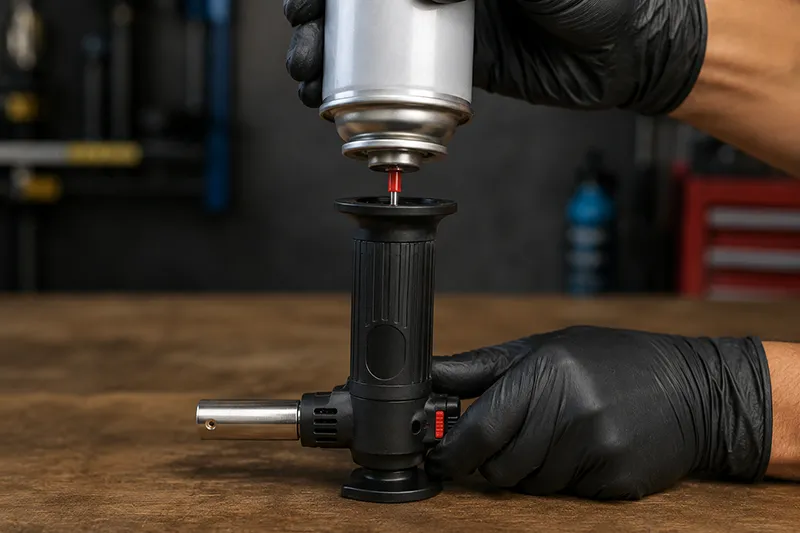
The short answer
Refill only when the torch is off, cool, and away from anything that could ignite butane
Use compatible fuel and the correct adapter, follow the fill position and stopping point in the torch manual, then wait the specified settling time before checking for leaks and lighting.
What You Need Before You Start
The torch manual determines the correct fuel, adapter, fill position, stopping point, and waiting time. “More refined” does not automatically mean compatible. If you are comparing cans, read our guide to choosing butane fuel.
- A torch that is fully extinguished, cool, and free of visible damage
- The torch manual or current manufacturer instructions
- Compatible liquid butane and the correct nozzle or adapter
- A stable, ventilated work area away from flames, sparks, smoking, and hot surfaces
How to Refill a Butane Torch
1
Check the manual and prepare the torch
Confirm the required fuel, adapter, fill position, full-tank indicator, and waiting time. Turn the torch off, release any flame lock, let it cool completely, and stop if the body or refill valve looks damaged.
2
Prepare a safe refill area
Work where ventilation is good and there are no flames, pilot lights, sparks, cigarettes, hot surfaces, or combustible materials nearby.
3
Align the can and refill valve
Fit the correct nozzle or adapter. Unless the manual says otherwise, hold the torch with its refill valve facing up, invert the fuel can, and place the nozzle squarely into the valve.
4
Fill with steady pressure
Press the can straight into the valve without pumping it. Stop at the time or full-tank signal stated in the manual. Dremel, for example, directs VersaTip and VersaFlame users to stop when fuel begins escaping at the valve; other torches may use a different indicator.
5
Let the fuel settle, then check the torch
Wait for the period specified by the manufacturer—at least three minutes for the Dremel models above. Do not ignite if you notice wetness, hissing, a strong fuel odor, or another sign of leakage. If everything is normal, light the torch at the recommended setting while pointing it away from people and combustibles.
What to Do If Fuel Escapes or You Suspect a Leak
Stop filling and do not light the torch. Keep the area ventilated while the escaped fuel dissipates, then follow the manufacturer’s leak-check procedure. Dremel instructs users to look for continuous bubbling with a soapy-water solution—never a flame. Stop using a torch whose valve keeps leaking, that will not shut off, or that appears damaged.
Common Refilling Mistakes to Avoid
- Using an incompatible fuel or adapter
- Holding the can at an angle, pumping it, or forcing a poor fit
- Treating another torch’s fill time as a universal rule
- Continuing after the stated full-tank indicator appears
- Purging, cleaning, or dismantling the valve without model-specific instructions
- Chilling or freezing the torch before refilling
If the Torch Will Not Light After Refilling
Confirm that the settling time has passed, the torch is not leaking, the safety lock is released correctly, and the flame control is at the recommended ignition setting. Do not keep clicking the igniter while gas accumulates or clean and dismantle the jet without manufacturer instructions. Continue with our butane torch troubleshooting guide if the problem remains.
Frequently Asked Questions
Should I purge a butane torch before every refill?
Not unless the torch manufacturer tells you to. Some models or troubleshooting procedures call for releasing trapped air or residual fuel, but making purging a universal step can release flammable gas and may damage the valve if done incorrectly.
Can I use any can of butane?
No. Use the fuel type and valve adapter specified by the torch manufacturer. Read our butane fuel guide for help evaluating compatibility and can quality.
Why does butane spray around the refill valve?
The nozzle may be misaligned, the adapter may be wrong, the tank may be full, or the refill valve may be damaged. Stop filling, ventilate the area, and check the instructions. Do not ignite the torch until all escaped fuel has dissipated and you have ruled out a leak.
How do I know when the torch is full?
Use the indicator described in the torch manual, which may be a stated fill time, a fuel-window level, or fuel beginning to escape at the valve. Stop as soon as that indicator occurs.
Safety Sources
This guide uses the official Dremel VersaTip operating and safety instructions, the official Dremel VersaFlame instructions, and Dremel’s butane-tool FAQ as concrete examples. Always use the instructions supplied for your exact torch and fuel can.