
Last updated: July 14, 2026
Start with compatibility, not the purity claim on the can. The fuel must use the right container and fit the device’s valve before anything else matters.
The wrong canister will not connect, and a poorly fitting refill tip can spray fuel around the valve. Once the format and fit are right, fuel quality matters most in jet lighters and precision torches with small fuel passages.
The Short Answer
- Identify whether the device has a built-in tank or accepts a removable canister.
- Follow the device manual when it specifies a fuel or canister model.
- Confirm that the refill nozzle seals cleanly without being forced.
- Compare purity claims only after compatibility is established.
- Choose an established manufacturer with clear specifications and safety instructions.
| Device type | Correct fuel format | Compatibility check | Quality priority | Do not substitute |
|---|---|---|---|---|
| Refillable lighter or torch | Butane refill can | Nozzle fits the refill valve squarely and seals | Clear impurity or quality specification | Removable stove canister |
| Cassette stove or canister-mounted torch | Manufacturer-specified removable canister | Correct connection, notch, construction, and safety specification | Exact appliance compatibility | Lighter refill can or improvised transfer |
| Proprietary or screw-on appliance | Exact fuel container named by the manufacturer | Model and connection match the manual | Manufacturer approval | Adapters not approved for the device |
What Type of Butane Container Does Your Device Use?
Refill Cans for Built-In Tanks
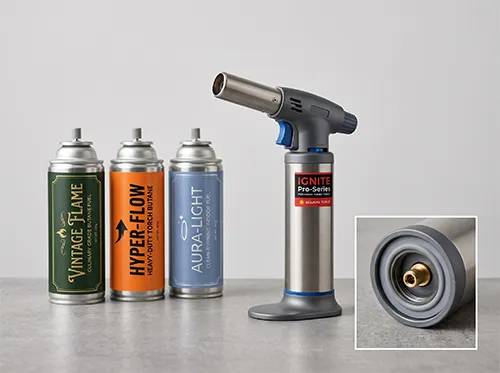
Compact torches, cigar lighters, utility lighters, and cordless soldering tools often have an internal tank. The nozzle of an inverted refill can presses into a valve on the device.
Some cans use a universal-style tip; others include adapters for less common valves. A larger can gives you more fuel, not a better-fitting nozzle. If a so-called universal tip sprays fuel down the side of the lighter, it is not a usable fit for that valve.
Removable Canisters for Stoves and Mounted Torches
Portable stoves and some culinary torches connect directly to a removable cassette-gas or 8-ounce-style canister. The canister remains attached while the appliance operates, leaving less room for substitution.
The appliance manual should identify the required connection and canister specifications. Iwatani, for example, specifies its BU-6 canister for its appliances and states that it is listed to UL 147B and complies with DOT 2P cylinder requirements (Iwatani BU-6 specifications). Transferring fuel between container types is unsafe, and an improvised adapter is not a substitute for the correct canister.
Follow the Device Manufacturer’s Recommendation
Fuel pressure, valve design, seals, and canister connections vary. If the manual names a fuel model, use it or contact the manufacturer for an approved alternative. Another brand may work, but the word “butane” on the label does not guarantee compatibility.
This matters most for canister-mounted appliances, older lighters, proprietary connections, and equipment still under warranty. If the manual is missing, search the exact device model rather than trusting a general retailer compatibility list.
How Much Does Butane Purity Matter?
Purity claims become more relevant when a device has very small jets. Contaminants can collect in the fuel system and may contribute to sputtering, misfires, or clogged valves over time.
Manufacturers describe quality differently. XIKAR says its premium refill fuel contains less than 15 parts per million of impurities (XIKAR product specification). Colibri publishes a 99.9994 percent purity claim for its premium lighter butane (Colibri lighter guide).
Treat those numbers as product-specific claims. Labels such as “triple refined,” “five-times refined,” and “premium” are difficult to compare because brands do not define or measure those terms consistently.
For a jet lighter or fine-flame torch used regularly, look for a measurable quality claim, clear filling instructions, and an identifiable manufacturer. With a canister-mounted appliance, the correct connection and safety specification take priority over purity language.
What Does a Correct Refill Tip Fit Look Like?
The nozzle should meet the refill valve squarely and form a seal under light, straight pressure. A brief hiss may occur as the connection is made. Fuel immediately spraying around the valve points to misalignment, the wrong tip size, or a damaged valve.
Use an included adapter only when the device or fuel manufacturer indicates it. Forcing a tip, enlarging a valve, or stacking adapters can damage the seal. When replacing a can that worked well, compare the new nozzle and adapter with the old setup before refilling.
What Size Butane Can Should You Buy?
For occasional kitchen, craft, or repair use, a smaller refill can is easier to store and limits the amount of pressurized fuel kept at home. Frequent users may prefer a larger can for a lower cost per ounce. Before buying a multipack, make sure the nozzle works with your device and that every can can be stored safely.
Canister-mounted appliances are different: buy the exact removable canister specified by the manufacturer. Reject a canister that is leaking, rusted, bulging, badly dented, or damaged around the rim, notch, or valve.
Cold Weather and High-Altitude Use
Butane pressure and vaporization decrease as temperature drops, so cold conditions can weaken the flame. This is a limitation of butane itself, not necessarily a sign of poor fuel. Let the device warm naturally within the temperature limits in its manual. Never heat a fuel can, place it near a flame, or use hot water to increase its pressure.
“High-altitude” fuel is not a universal cure for a weak flame. Use it only when its container fits and the device manufacturer permits it.
Five Safe Refilling Steps
- Turn the device off, let it cool completely, and move to a ventilated area away from flames, sparks, hot surfaces, and smoking.
- Inspect the valve and nozzle for dirt or damage, then set the flame control as the device manual directs.
- Hold the device and fuel can in the specified orientation. Many refillable torches require the fill valve upward and the can inverted.
- Press the tip straight into the valve. Stop if fuel sprays around the connection or when the device’s refill behavior indicates the tank is full.
- Wait the manufacturer-specified time before ignition, then check for the smell or sound of escaping gas. Never ignite a leaking device.
Colibri tells users to wait at least three minutes after filling before lighting (Colibri lighter guide). Instructions vary, so use the waiting time supplied with your device. For the full procedure, see how to refill a butane torch.
Storage and Disposal
Store pressurized butane cans upright in a cool, dry, ventilated place away from children, ignition sources, direct sun, and impact. Follow the temperature limit printed on the fuel container and keep cans out of parked vehicles and other places that can become hot.
Do not puncture or burn a can. Local disposal rules vary, and Iwatani advises treating even an empty butane canister as a hazardous product and asking the local waste authority how to dispose of it (Iwatani safety FAQ).
Warning Signs the Fuel or Fit Is Wrong
- The nozzle will not meet the refill valve squarely.
- Fuel sprays or leaks around the connection.
- The can lacks an identifiable manufacturer or clear safety instructions.
- The container is rusted, bulging, leaking, or damaged at the rim or valve.
- The device repeatedly sputters or misfires after a correct refill and adjustment.
A brief uneven flame just after a refill can result from excess fuel or temperature change. Repeated misfiring after the device has rested may point to a blocked jet, leaking seal, worn valve, or igniter problem—not simply a bad brand of fuel. Stop using a leaking device. Our butane torch troubleshooting guide covers common symptoms.
Frequently Asked Questions
Can I use lighter butane in a refillable torch?
Sometimes. The torch must allow refill-can butane, and the nozzle must fit its valve correctly. “Lighter fuel” or “torch fuel” on the label is not proof of compatibility.
Is more highly refined butane always better?
No. Cleaner fuel can help precision jets, but advertised refining stages are not a consistent comparison between brands. Give more weight to a published impurity specification, manufacturer reputation, valve fit, and the device requirements.
Can I use an 8-ounce stove canister to refill a torch?
Do not improvise a transfer. A torch with an internal tank needs a compatible refill can. A torch designed to mount on a removable canister needs the specified canister.
Why does the flame sputter after refilling?
Possible causes include excess liquid fuel, trapped air, the wrong flame setting, blocked fuel passages, or a mechanical fault. Turn the device off, move it away from ignition sources, and let it rest before following its troubleshooting instructions.
The Bottom Line
Compatibility is the first filter. Fuel quality is the second. A highly refined product is still the wrong choice if its container, pressure, or nozzle does not match the device.
For precision torches and jet lighters, a measurable impurity claim is more informative than a vague “premium” label. For removable-canister appliances, the specified connection and safety standard come first.